
Welcome Note from the President
German Society for Otor-Rhino-Laryngology, Head and Neck Surgery e. V.
Dear colleagues,
Ladies and gentlemen,
It is with great pleasure that I cordially invite you to the Annual General Meeting of the German Society for Otorhinolaryngology, Head and Neck Surgery, to be held in Dresden from 5 to 8 May 2027.
Our specialism uniquely combines the entire field of head and neck surgery with the human body’s key sensory functions – hearing, balance, smell and taste. Hardly any other medical specialism is so comprehensive in scope, bringing together doctors specialising in both conservative and surgical treatment within a shared scientific and clinical exchange.
Over the past few years, both otorhinolaryngology and head and neck surgery have undergone impressive scientific and technological developments. Advances in medical technology and personalised medicine now offer us diagnostic and therapeutic options that were scarcely imaginable just a few years ago. Diagnostic procedures and treatments are becoming increasingly precise, tailored to the individual and less invasive for our patients.
Examples of this include high-resolution imaging techniques, modern molecular diagnostics and therapeutic approaches, image-guided microscopic and endoscopic surgical procedures, and robot-assisted and system-assisted surgery. We are currently witnessing a profound transformation, particularly in oncological surgery and tumour therapy: multimodal treatment approaches, personalised treatment decisions, molecularly stratified therapies, and modern induction and immunotherapies are opening up new prospects for preserving function and improving survival for our patients.
Similarly, genetic diagnostics and therapy, as well as innovative immunological approaches, have reached a new stage of development within our speciality. The close integration of surgery, radiotherapy, drug-based tumour therapy and translational research makes our speciality more dynamic and interdisciplinary than ever before.
The pace of these developments is staggering. This makes personal academic exchange, collaborative learning and the discussion of new findings all the more important. I would therefore like to take this opportunity to cordially invite you to gain first-hand insight into the latest developments in our field and to discuss them with us at the 2027 Annual Meeting.
I am particularly delighted that our Annual Meeting is now being held in my home city of Dresden for the second time. Together with my medical team and the conference agency Conventus, we are honoured to be hosting this important event.
A warm welcome to Germany’s second most beautiful city – although we Dresdeners are, of course, convinced that there is still room for debate as to which city takes first place. You can look forward to a city with a rich scientific tradition, an impressive cultural scene, warm hospitality and an inspiring atmosphere.
I look forward to welcoming you in person in Dresden in 2027.
With warm regards
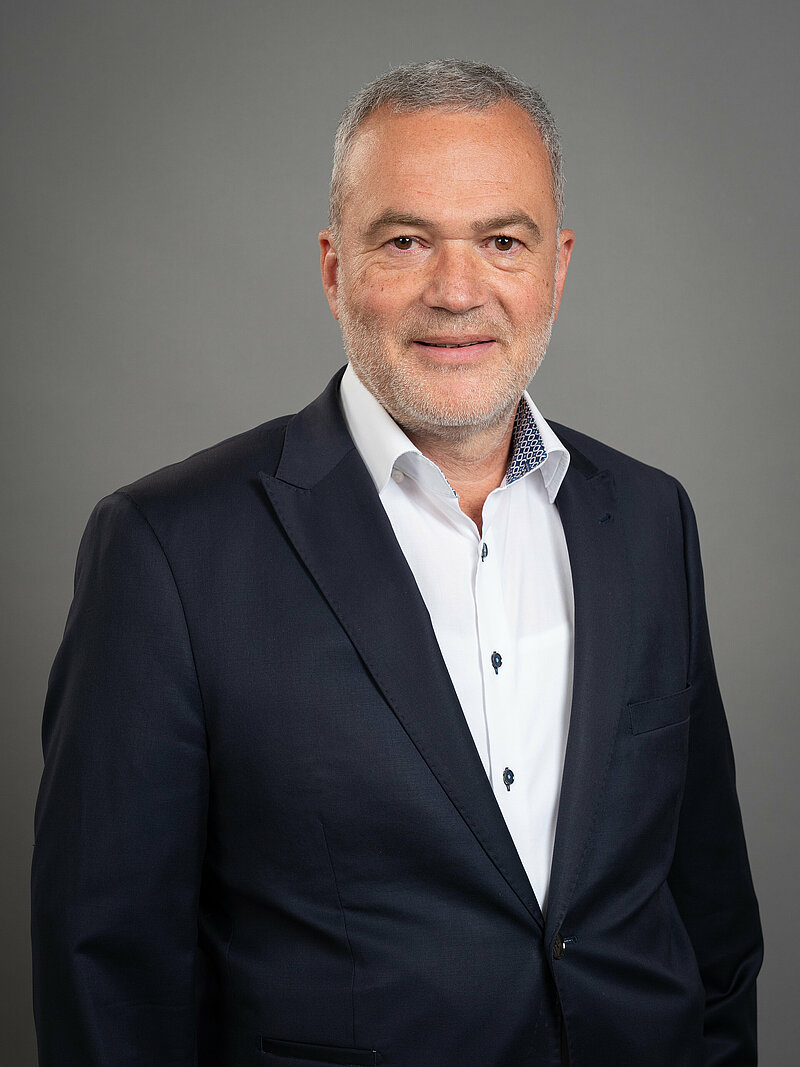
Prof. Dr. med. Dr. h.c. Thomas Zahnert
President of the German Society for Otorhinolaryngology, Head and Neck Surgery
Welcome Note from the Prime Minister
of Saxony
A warm welcome to the Free State of Saxony!
The ORL annual congress was first held here in 1931. This is a sign that, even back then, Saxony was carrying out excellent work in research and healthcare, which was recognised far beyond the borders of the Free State.
We are now delighted to welcome the Annual Congress to our Free State for the sixth time. And you, dear participants, can look forward to four days of intensive discussion in the heart of our wonderful state capital, Dresden.
There is plenty to discuss; after all, the progress in your field has been tremendous. You don’t need to be an expert to notice that. Today, far more often than ten or twenty years ago, I meet people with hearing impairments who have seen a huge improvement in their quality of life thanks to a cochlear implant. The cutting-edge research and top-class healthcare provided by our Dresden University Hospital have played a significant role in this.
Improving quality of life through state-of-the-art diagnostics, treatment and rehabilitation is also a key priority of Saxon and German health policy. At the same time, this progress must remain affordable for the solidarity-based community and taxpayers. This is what the healthcare reforms – both those already adopted and those still to come – are all about.
The Free State of Saxony is making a major contribution. With the help of the federal and state Transformation Fund, we intend to invest an additional almost 2.4 billion euros in the modernisation and transformation of our Saxon hospitals by 2035. In doing so, we are ensuring a very well-developed, efficient and high-quality hospital care system.
Where such strategic planning exists, cutting-edge medicine and excellent care across the region have a solid foundation. Equally important for further improvements is the professional exchange of ideas, such as that which you foster through your congress. I hope you have a wonderful time in Dresden and send you my warmest regards with a hearty ‘Glückauf’!
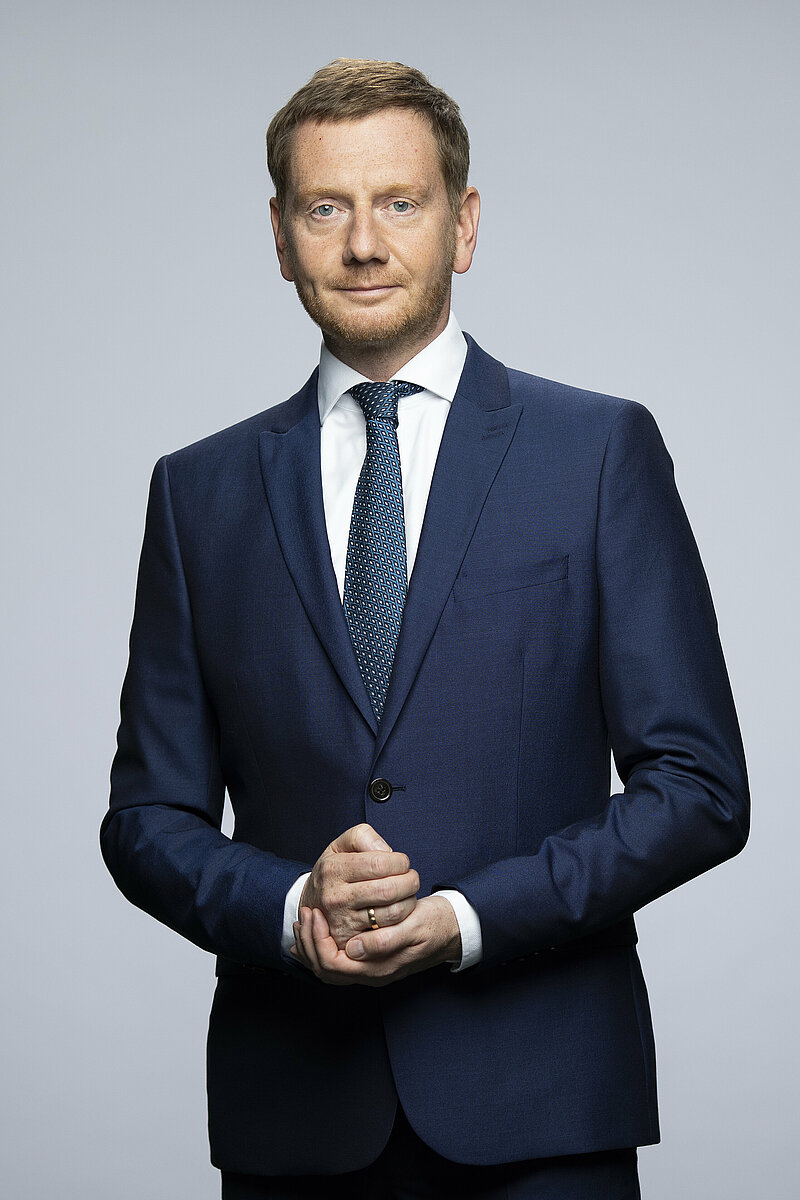
Michael Kretschmer